
Burlingame
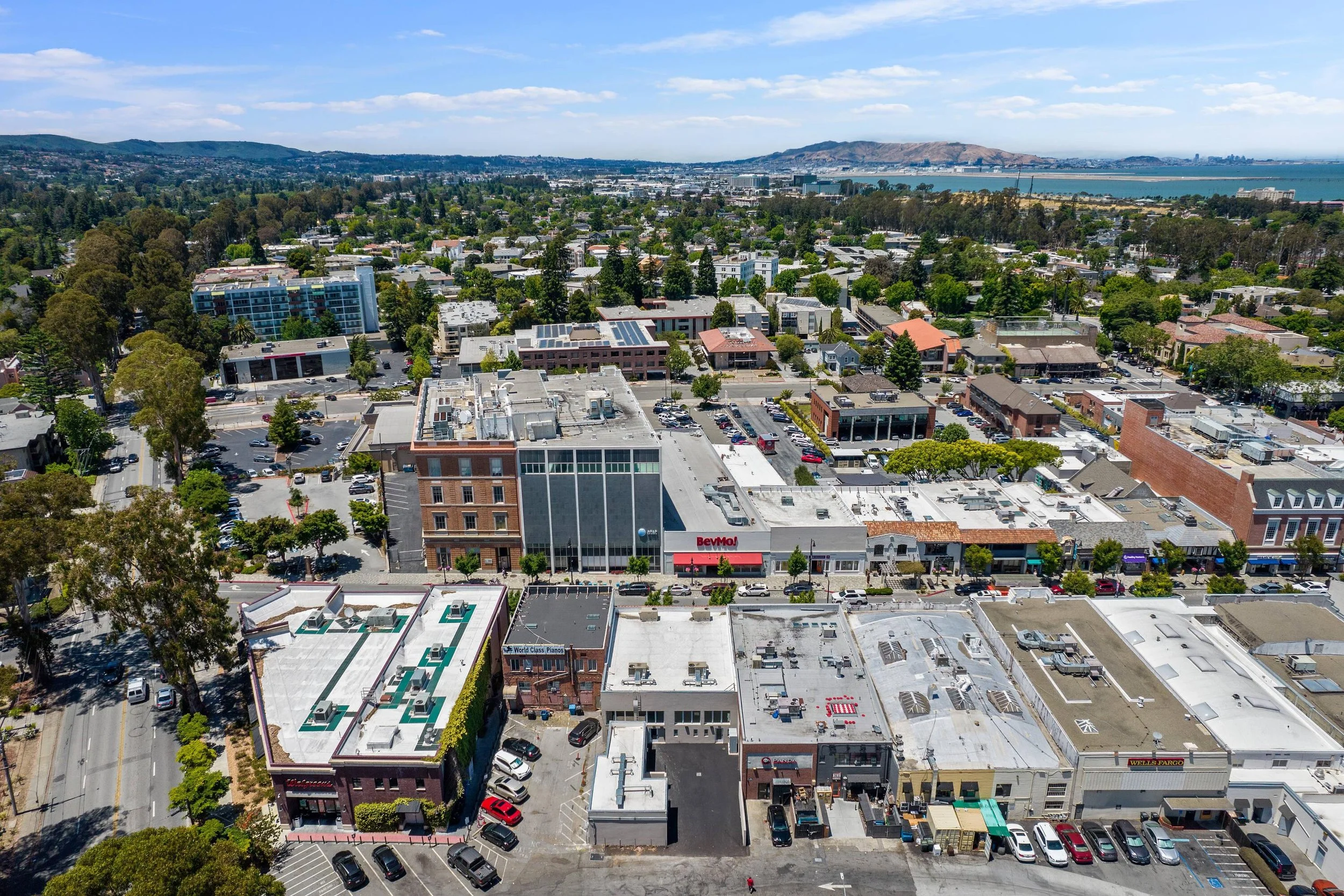
Burlingame is located on the San Francisco Peninsula, just south of San Francisco International Airport, and is known for its tree-lined streets, established residential neighborhoods, and convenient access to both San Francisco and Silicon Valley. Often called the “City of Trees,” Burlingame combines a polished suburban feel with a lively commercial center and easy access to the Bay.
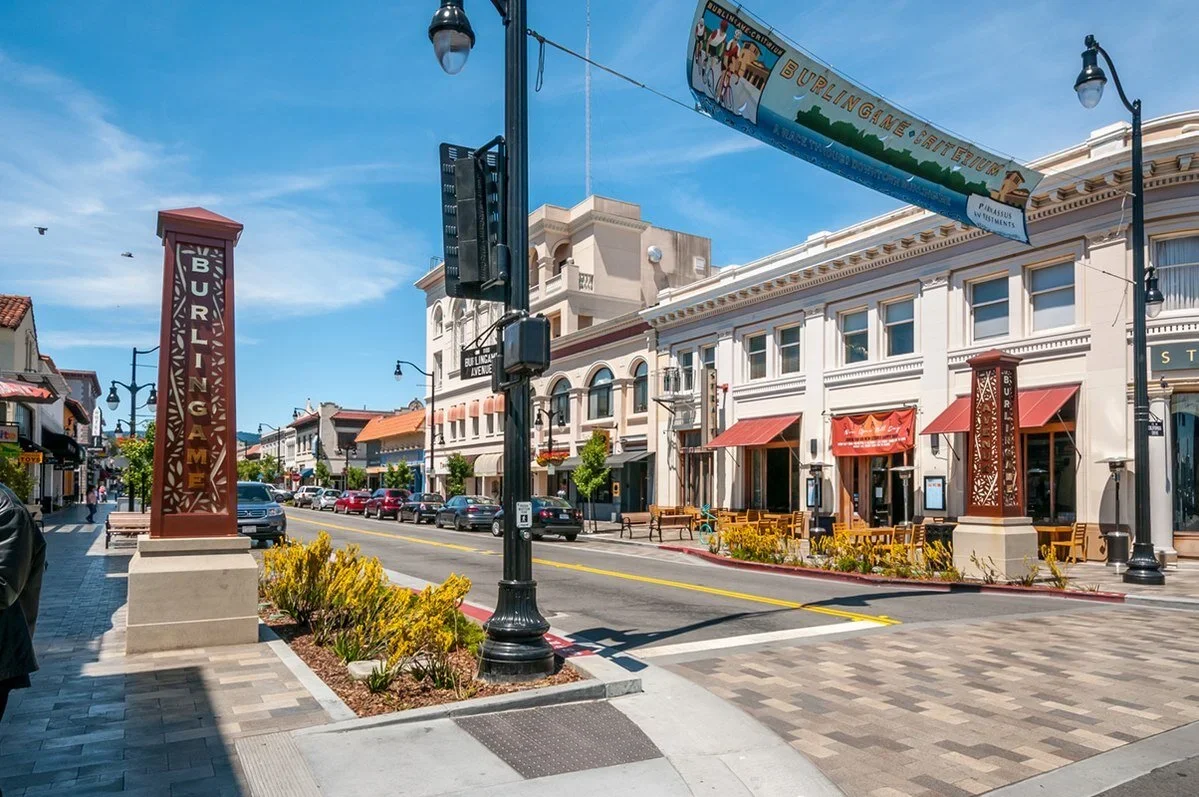
One of Burlingame’s strongest lifestyle features is its two distinct shopping and dining districts. Downtown Burlingame Avenue is the livelier and more upscale area, with restaurants, cafés, boutiques, and national retailers, while Broadway offers a smaller, more traditional neighborhood shopping experience with local restaurants and independent businesses.
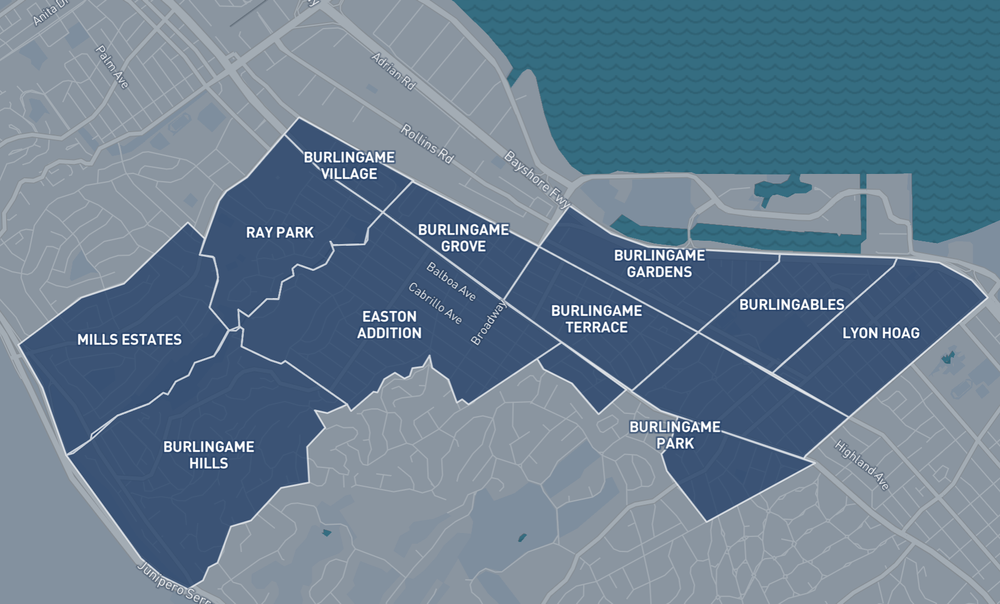
From a residential perspective, Burlingame offers a wide range of neighborhoods. Areas closer to Downtown and Easton Addition are known for mature landscaping, classic architecture, and convenient access to shops and restaurants, while neighborhoods farther west toward Burlingame Hills and Mills Estates generally offer larger lots, more privacy, and a quieter hillside setting. The city also has a significant Bayfront area east of Highway 101, with hotels, offices, and waterfront access.
From a real-estate perspective, Burlingame stands out for its combination of established neighborhoods, walkable commercial districts, mature trees, and a highly convenient Peninsula location. With access to Highway 101, I-280, Caltrain, and SFO just minutes away, residents can easily reach San Francisco, the broader Peninsula, and Silicon Valley. For buyers seeking a balance of residential character, walkability, convenience, and proximity to San Francisco, Burlingame remains one of the Peninsula’s most attractive communities.
Race & Ethnicity
Schools
Elementary Schools
Middle School
High School
Understanding Burlingame Public Schools
Elementary and middle-school students in Burlingame are primarily served by the Burlingame School District (BSD), while high-school students are served by the San Mateo Union High School District (SMUHSD).
Burlingame School District · BSD
BSD currently operates seven school sites: Franklin Elementary, Hoover Elementary, Lincoln Elementary, McKinley Elementary, Roosevelt Elementary, Washington Elementary, and Burlingame Intermediate School.
The six elementary schools serve TK through Grade 5, while Burlingame Intermediate School serves Grades 6–8.
Elementary Schools · TK–5
Burlingame's six public elementary schools are Franklin, Hoover, Lincoln, McKinley, Roosevelt, and Washington.
Students are generally assigned based on the specific residential address and neighborhood attendance area. However, BSD makes clear that living within a school's attendance area does not guarantee placement. If a grade level reaches capacity, a student may be placed at another elementary school within the district.
Burlingame Intermediate School · Grades 6–8
Burlingame Intermediate School is BSD's district middle school and serves Grades 6–8. Located at 1715 Quesada Way, BIS provides a comprehensive middle-school academic program and student support.
High School · SMUHSD
At the high-school level, Burlingame is served by the San Mateo Union High School District. Burlingame High School is the principal comprehensive public high school located within the city.
SMUHSD serves multiple Peninsula communities and maintains district-level enrollment, transfer, and open-enrollment policies. High-school enrollment should therefore not be understood as simply having one fixed option based only on living in Burlingame.
Burlingame High School
Burlingame High School has strong ties to the local community and offers academic programs, visual and performing arts, athletics, clubs, service learning, and college and career exploration.
The school currently enrolls approximately 1,450 students. Enrollment and district policies may change over time, so buyers should verify current registration and enrollment rules directly with SMUHSD.
Our Lady of Angels School
Our Lady of Angels School is located at 1328 Cabrillo Avenue and is a Catholic K–8 private school in Burlingame.
The school serves Kindergarten through Grade 8 , providing a continuous pathway from elementary through middle-school years.
OLA emphasizes academics, spiritual growth, character, compassion, and community.
The school currently enrolls approximately 300 students and is one of Burlingame's more established Catholic K–8 private-school options.
Mercy High School Burlingame
Mercy High School Burlingame is located at 2750 Adeline Drive and is a Catholic all-girls college-preparatory high school in Burlingame.
The school serves Grades 9–12 and provides a comprehensive college-preparatory curriculum.
Academic offerings include English, mathematics, science, social science, world languages, visual and performing arts, and electives.
Mercy also offers athletics, clubs, leadership, service, and student-life programs, making it one of the Peninsula's more established all-girls private high-school options.
Market Trend
Home Price Trends
Market Activity
Neighborhoods
Burlingame Hills
Burlingame Hills occupies the western hillside area and feels distinctly different from Burlingame’s flatter neighborhoods. It is characterized by larger lots, mature trees, greater privacy and selected Bay or canyon views.
Mills Estates
Mills Estates is one of Burlingame’s more modern residential areas. It is known for larger Ranch homes, Mid-Century design, open floor plans and larger lots. The neighborhood also includes a notable group of Eichler homes.
Easton Addition
Easton Addition is known for mature tree-lined streets, classic architecture and substantial single-family homes. Craftsman, Tudor, bungalow and other historic styles coexist with remodeled and newer custom residences.
Ray Park
Ray Park has a relatively consistent residential character, with many mid-century single-family homes, regular lots and quiet residential streets. Much of the neighborhood was developed during and shortly after World War II.
Burlingame Village
Burlingame Village is a compact North Burlingame neighborhood developed during and immediately after World War II. Its curving streets, cul-de-sacs, compact parcels and limited through-traffic give it a distinctive layout centered around Village Park.
Burlingame Grove
Burlingame Grove is one of the city’s earlier residential neighborhoods. Its mature streets include bungalows, Craftsman homes, Tudor-style residences and later remodels, while Broadway is conveniently nearby.
Burlingame Terrace
Burlingame Terrace combines older character homes, flat streets and strong walkability. Its location between the city’s two principal commercial districts makes everyday shopping and dining particularly convenient.
Burlingame Gardens
Burlingame Gardens generally has a more compact housing scale than areas such as Easton Addition or Burlingame Park. It is characterized by older single-family homes, practical lots and convenient access.
Burlingables
Burlingables is located close to Burlingame Avenue, Washington Park and the Burlingame Caltrain station. It is known for classic Burlingame homes, mature tree-lined streets and strong walkability.
Lyon Hoag
Lyon Hoag was Burlingame’s first subdivision, created in 1896. Today it contains a varied mix of older cottages, bungalows, remodeled homes and newer residential development, with convenient access to Burlingame Avenue.
Burlingame Park
Burlingame Park is a relatively small residential area positioned beside Hillsborough and within convenient walking distance of Burlingame Avenue. It is characterized by larger homes, larger lots and historic architecture.
Burlingame Hills
Burlingame Hills occupies the western hillside area and offers a residential environment that differs substantially from Burlingame’s flatter neighborhoods.
Publicly reported neighborhood-level data indicates an average single-family home size of approximately 2,801 sq.ft., a median lot size of approximately 11,761 sq.ft., and a median year built of 1955.
Properties often feature mature trees, irregular hillside parcels and greater privacy. Selected homes have Bay, canyon or broader Peninsula views.
Buyers should evaluate slope, usable land, driveway configuration, retaining structures, insurance considerations and exact jurisdiction on an address-specific basis.
Mills Estates
Mills Estates is a more modern neighborhood than many of Burlingame’s early twentieth-century residential areas.
Publicly reported neighborhood-level data indicates an average single-family home size of approximately 2,249 sq.ft., a median lot size of approximately 9,147 sq.ft., and a median year built of 1962.
Housing includes one-level Ranch homes, two-story tract-style homes and a documented group of Eichler residences. Eichler homes in the neighborhood are associated with atriums, large windows and open Mid-Century floor plans.
Buyers are often comparing lot size, yard usability, orientation, views and interior layout, while access to Highway 280 is also convenient.
Easton Addition
Easton Addition is one of Burlingame’s best-known historic residential neighborhoods, with mature trees and substantial early twentieth-century housing.
Publicly reported neighborhood-level data indicates an average single-family home size of approximately 2,484 sq.ft., a median lot size of approximately 6,098 sq.ft., and a median year built of 1928.
Architecture varies considerably, including Craftsman, Tudor, bungalow and other historic styles, together with remodeled and newer custom homes.
Buyers should compare architectural character, renovation quality, lot usability and exact street position rather than relying on square footage alone.
Ray Park
Ray Park is an established post-war neighborhood with relatively regular parcels and a coherent residential character.
Publicly reported neighborhood-level data indicates an average single-family home size of approximately 2,094 sq.ft., a median lot size of approximately 6,098 sq.ft., and a median year built of 1949.
The neighborhood was developed during and immediately after World War II on former Mills estate land. Much of the housing stock is mid-century in character.
Buyers often focus on floor plan, remodeling quality, yard usability and exact street setting.
Burlingame Village
Burlingame Village is a compact neighborhood at the northern end of Burlingame, organized around curving streets, cul-de-sacs and Village Park.
The neighborhood was developed during and immediately after World War II on former Mills estate land. Housing is primarily single-family.
Parcel data places the median lot at approximately 5,000 sq.ft., with unusually consistent lot sizes across the neighborhood.
Because many homes have been altered over time, buyers should compare renovation quality, additions, floor-plan efficiency and remaining yard space on a property-specific basis.
Burlingame Grove
Burlingame Grove is one of Burlingame’s earlier residential neighborhoods and includes several particularly attractive tree-lined streets.
Publicly reported neighborhood-level data indicates an average single-family home size of approximately 1,714 sq.ft., a median lot size of approximately 6,098 sq.ft., and a median year built of 1926.
Housing includes bungalows, Craftsman homes, Tudor-style residences and later remodeled or replacement properties.
The neighborhood combines historic housing, mature streets and convenient access to Broadway.
Burlingame Terrace
Burlingame Terrace occupies a central location between Broadway and Burlingame Avenue, giving residents convenient access to both commercial districts.
Publicly reported neighborhood-level data indicates an average single-family home size of approximately 1,861 sq.ft., a median lot size of approximately 5,662 sq.ft., and a median year built of 1925.
Housing is varied, with cottages, Craftsman homes and other older residences, together with remodeled and rebuilt properties.
The neighborhood’s key advantage is its flat setting and convenient access to both Broadway and Burlingame Avenue.
Burlingame Gardens
Burlingame Gardens is an established residential area with a generally more compact housing scale than some of Burlingame’s larger-home neighborhoods.
Publicly reported neighborhood-level data indicates an average single-family home size of approximately 1,654 sq.ft., a median lot size of approximately 6,098 sq.ft., and a median year built of 1938.
Much of the housing stock is older, with later additions, remodels and some newer infill homes.
Buyers should compare street location, renovation quality, lot usability and proximity to major roads.
Burlingables
Burlingables is one of Burlingame’s most conveniently located single-family residential areas, close to Burlingame Avenue, Washington Park and Caltrain.
Local neighborhood data reports an average lot size of approximately 5,000 sq.ft., compared with roughly 6,000 sq.ft. across Burlingame overall.
Local neighborhood guidance also notes that attached garages are common, which can improve backyard usability compared with properties where detached garages occupy the rear portion of the parcel.
Buyers should compare walkability, garage configuration, lot efficiency, street position and proximity to major transportation corridors.
Lyon Hoag
Lyon Hoag was Burlingame’s first subdivision, created in 1896. Residential development accelerated after the 1906 San Francisco earthquake.
Publicly reported neighborhood-level data indicates an average single-family home size of approximately 1,754 sq.ft., a median lot size of approximately 5,662 sq.ft., and a median year built of 1928.
Housing is relatively diverse, with older cottages and bungalows, remodeled properties and newer residential development.
Buyers should consider walkability, exact street position, housing type and proximity to Highway 101 when comparing properties.
Burlingame Park
Burlingame Park is a relatively small residential neighborhood located beside Hillsborough and close to Burlingame Avenue.
Publicly reported neighborhood-level data indicates an average single-family home size of approximately 2,589 sq.ft., a median lot size of approximately 7,405 sq.ft., and a median year built of 1925.
The neighborhood contains larger historic residences as well as remodeled and newer homes. Its housing scale is generally larger than many of Burlingame’s more compact neighborhoods.
Buyers should compare architecture, lot size, renovation quality and proximity to Burlingame Avenue on a property-specific basis.